Witchcraft Altar Setup Ideas That Actually Work
Contents
Witchcraft altar setup begins with understanding one simple truth: your altar is where magic happens.
I’m not talking about pulling rabbits from hats or turning people into toads.
I mean the real work—setting intentions, connecting with what matters to you spiritually, and creating a space that genuinely shifts your energy when you step up to it.
After years of building, destroying, and rebuilding my own altars (and helping countless friends figure out theirs), I’ve learned that the “perfect” altar doesn’t exist.
What exists is your altar.
The one that makes you want to light a candle at 6 AM before the chaos starts.
The one that doesn’t collect dust because you actually use it.
Let me walk you through 20 altar setups that work for real people in real spaces—from cramped studio apartments to sprawling homes with dedicated ritual rooms.
By Witchcraft Type
1. Traditional Wiccan Altar
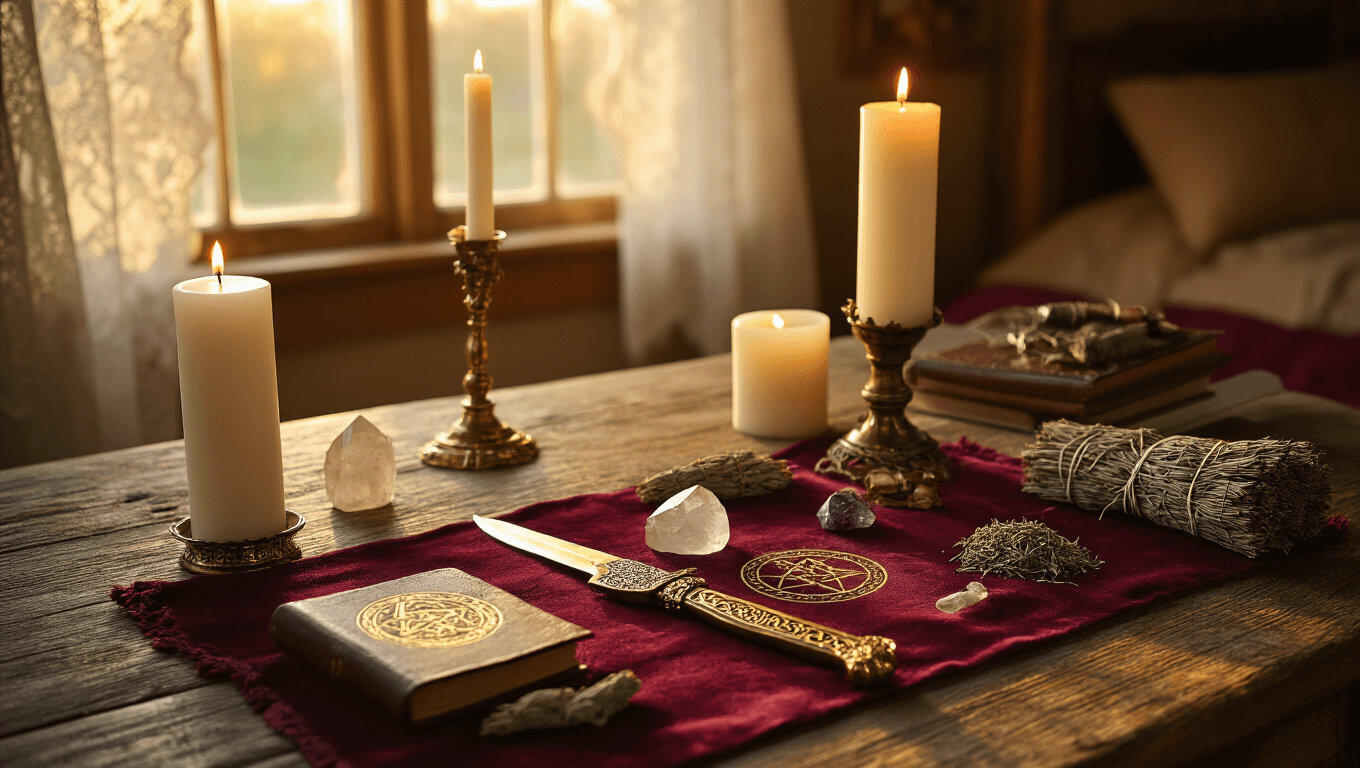
This is where most beginners start, and honestly, it’s a solid foundation.
Your Wiccan altar represents the four elements in physical form.
I remember my first setup—a wobbly card table in my college dorm with a feather for air, a shell with water, a crystal for earth, and a tea light for fire.
Not Instagram-worthy, but it worked.
What you’ll need:
- Athame or ritual knife for directing energy
- Wand (or just use your finger—seriously)
- Bell for clearing energy
- Candles in holder (white works for everything)
- Your Book of Shadows or journal
- Representations of each element placed in their cardinal directions
The beauty here is the structure.
When everything has its place, you can focus on the work instead of wondering where you put that one crystal.
2. Ceremonial Magic Altar
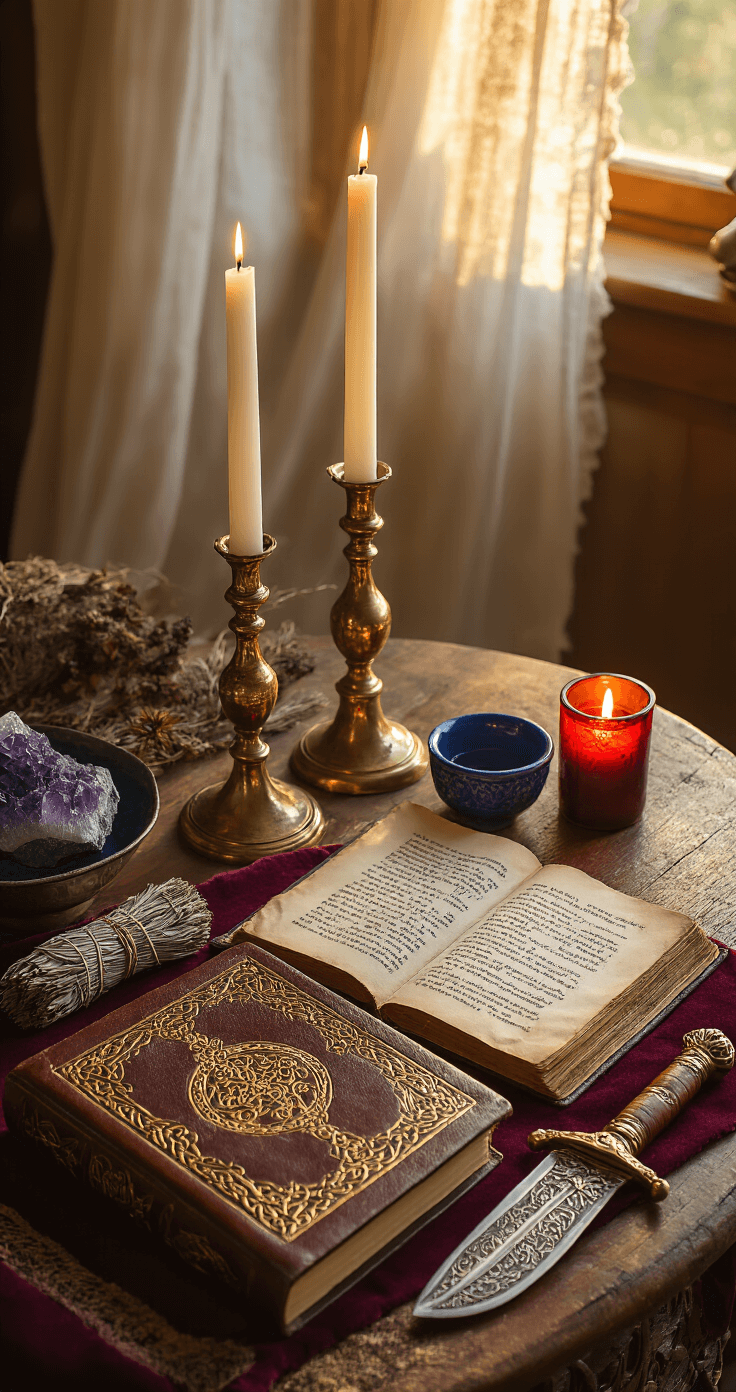
This setup is for folks who love symmetry and formal ritual.
Think less “cottage core witch” and more “I have a specific invocation for everything.”
The arrangement follows strict correspondences—masculine energy on the right, feminine on the left, with elemental tools placed according to traditional ceremonial magic texts.
I tried this approach for about three months.
It taught me precision but felt like performing surgery every time I wanted to do a simple spell.
Your mileage may vary.
Key elements:
- Formal arrangement with exact tool placement
- Specific colored candles for different workings
- Elemental representations in their proper quarters
- Usually includes a chalice, pentacle, wand, and blade
3. Crystal Witch Altar
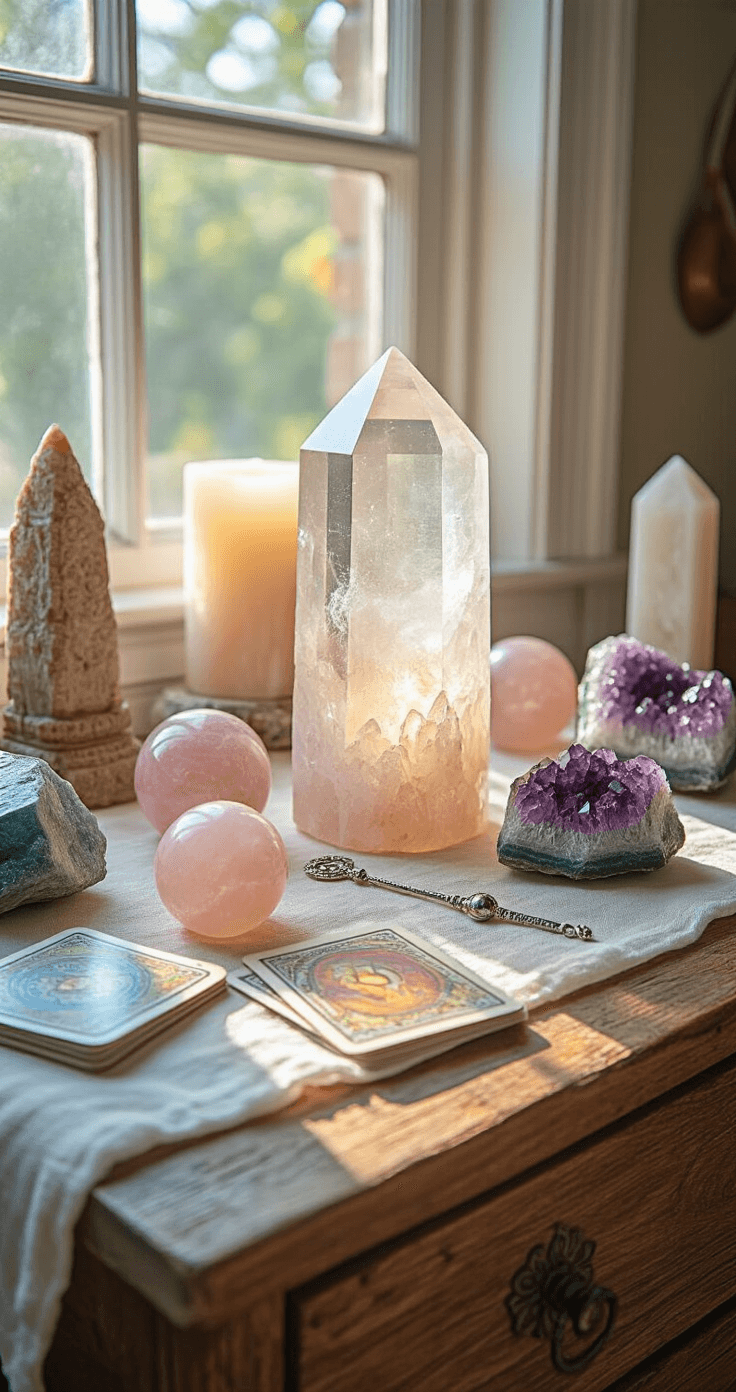
If you’re the person who can’t walk past a rock shop without dropping $50, this altar calls your name.
I built my first crystal altar after a particularly intense breakup.
Rose quartz everywhere.
Amethyst for the nightmares.
Clear quartz because apparently it “amplifies everything” (and I desperately needed amplification).
Must-haves:
- Rose quartz for love and self-compassion
- Amethyst for intuition and calm
- Clear quartz for amplifying intentions
- Selenite for cleansing (but keep it away from water)
- Your divination tools (tarot, pendulum, whatever speaks)
The trick is rotating your crystals based on what you’re working on.
Don’t just let them sit there looking pretty.
4. Kitchen Witch Altar
Your stove is already magical—you just haven’t been treating it that way.
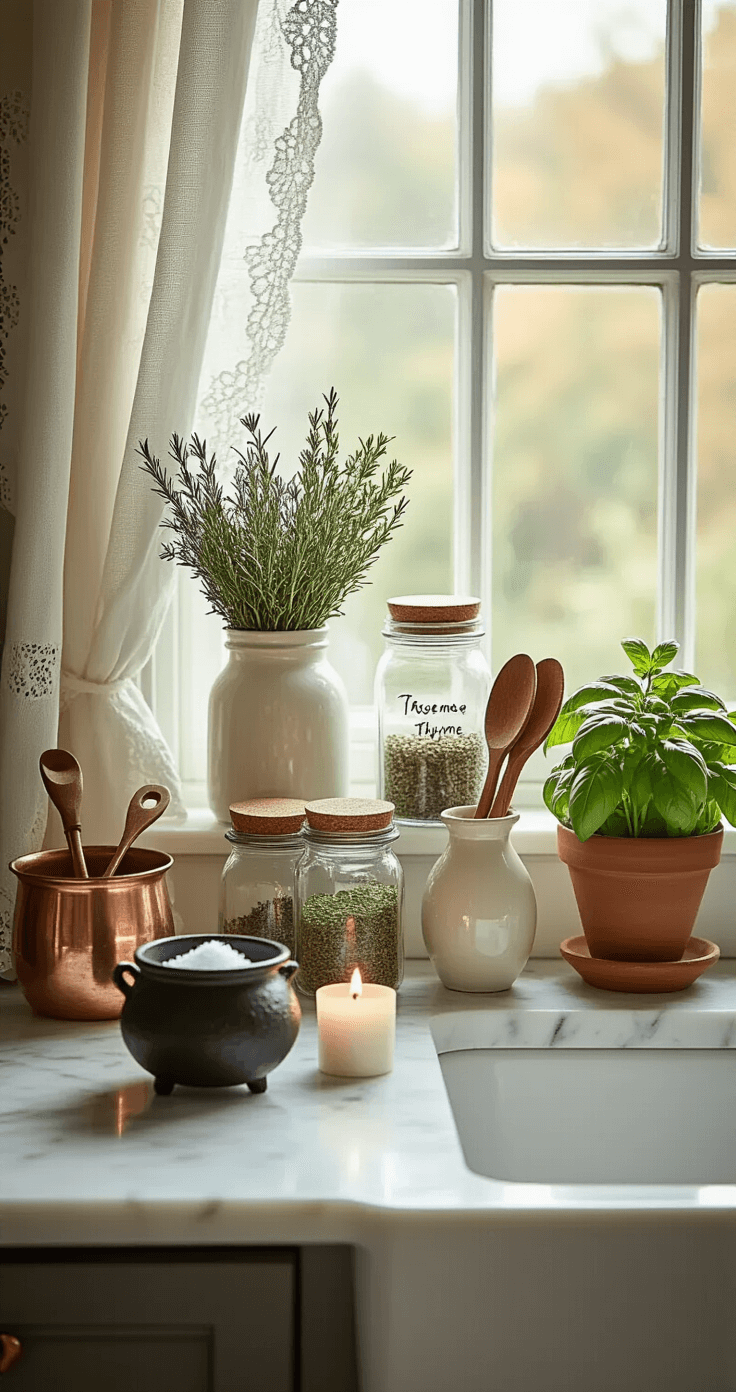
I set up my kitchen altar on the windowsill above my sink, and it transformed my relationship with cooking.
Suddenly, chopping onions became meditation.
Stirring soup became spell work.
What makes it work:
- Herbs in small jars (functional AND magical)
- A small candle you can safely light while cooking
- Wooden spoons that have seen some serious action
- Salt and pepper as elemental representations
- Maybe a small statue or image that makes you smile
The entire point is weaving magic into the everyday stuff you’re already doing.
5. Cottage Witch Altar
This aesthetic blew up on social media, but underneath the Pinterest-perfect photos is a genuinely lovely practice.
Cottage witchcraft centers on home, hearth, and making your living space feel protected and nourished.
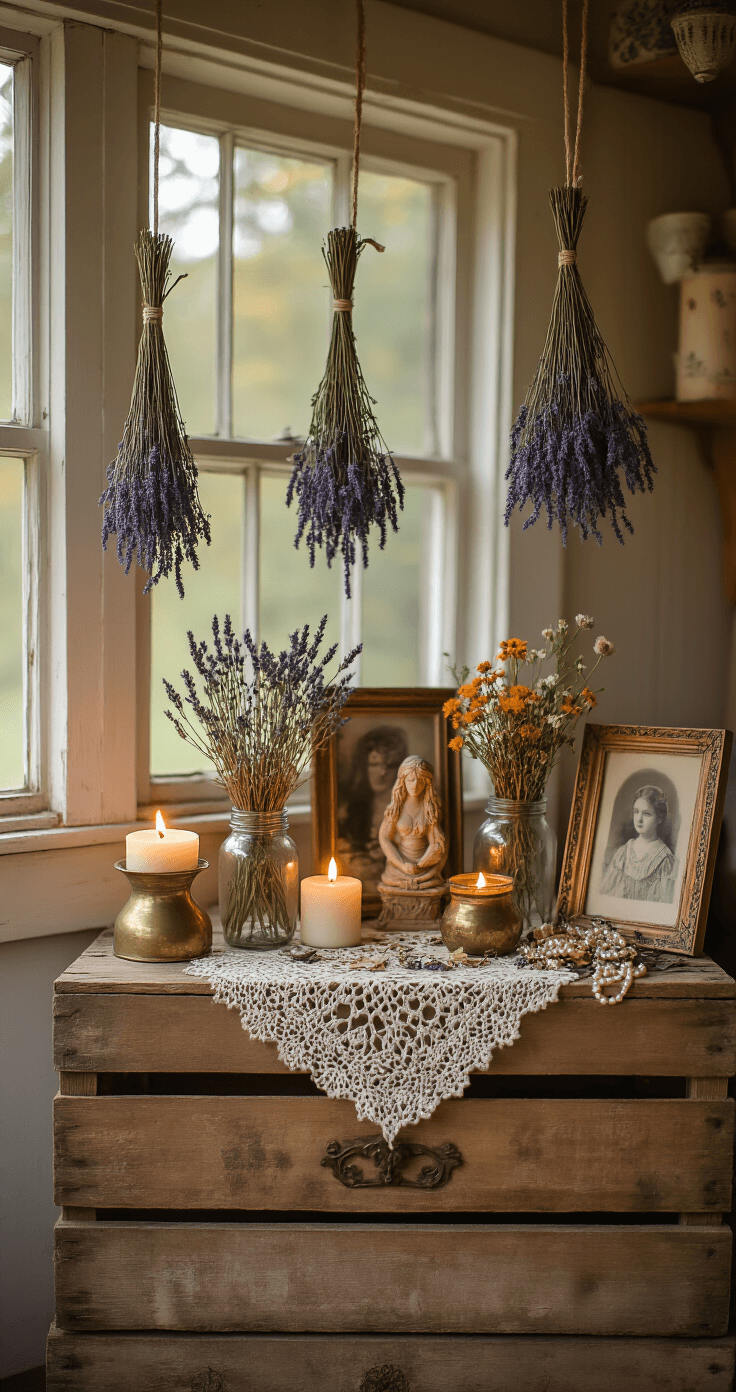
My cottage altar sits on an old wooden crate my grandmother used for storing quilts.
Essential vibes:
- Vintage or handmade items
- Dried flowers (lavender is basically mandatory)
- Candles in mismatched holders
- Items with personal history
- Cozy fabrics like lace or linen
Nothing here needs to cost money.
Raid your attic, check thrift stores, or ask elderly relatives if they have anything they’re getting rid of.