
How Fairy Lights Transform Any Room Into Pure Magic (And Why You Need Them Tonight)
Contents
Fairy lights aren’t just for the holidays anymore—they’re the secret weapon every home decorator uses to create instant ambiance.
I’ll never forget the first time I strung up some cheap fairy lights in my college dorm room. My roommate walked in, stopped dead in her tracks, and whispered, “It’s like we’re living in a freaking fairy tale.” She wasn’t wrong.
For less than twenty bucks and about forty-five minutes of work, I’d transformed our cinder-block prison into something that actually felt like home.
Fast forward fifteen years, and I still use fairy lights everywhere—my bedroom, my backyard, even wrapped around my bathroom mirror because why the hell not?
If you’re sitting there wondering whether fairy lights are worth the effort, let me save you some time: they absolutely are. And I’m about to show you exactly how to use them without making your space look like a teenage girl’s Tumblr page from 2014.
Why Fairy Lights Work When Everything Else Fails
Here’s the thing about overhead lighting—it’s harsh, unforgiving, and makes everyone look slightly ill.
Fairy lights solve this problem instantly. They create layered lighting that mimics natural sources like candlelight and fireflies. Your brain recognizes this as safe, warm, and welcoming.
I tested this theory when my sister was trying to sell her house. The place had good bones but felt cold and uninviting. We added battery operated fairy lights throughout the main living areas, and suddenly potential buyers were lingering instead of rushing through.
She got three offers within a week.
The psychological impact is real:
- Soft lighting reduces stress and anxiety
- Warm tones create feelings of comfort and safety
- Twinkling effects capture attention without overwhelming
- Strategic placement guides movement through a space

What You Actually Need (No Junk, I Promise)
Let me cut through the BS real quick. You don’t need seventeen different types of lights or some complicated installation system.
Start with these essentials:
Your primary light source should be plug-in LED string lights for permanent installations or battery powered LED lights for flexible arrangements. I keep both types on hand because sometimes you need the reliability of plugged-in power, and sometimes you need lights in places where cords would look ridiculous.
Glass containers multiply the magic through refraction and reflection. Grab some mason jars with fairy lights or just drop battery-powered strings into containers you already own. Old whiskey bottles work brilliantly for this, by the way.
Hanging materials matter more than you’d think. Get proper adhesive light clips instead of fighting with tape that either won’t stick or ruins your walls when you remove it. Trust me on this—I’ve lost enough security deposits to bad adhesive choices.
For smart features (which I resisted for years before becoming completely addicted), invest in lights with app controls that let you change colors, brightness, and patterns without getting off your couch. Revolutionary for someone as lazy as I am.
The Color Temperature Truth Nobody Tells You
This drives me crazy because it’s so simple but makes such a massive difference.
Warm white (2700K-3000K) looks like candlelight and makes everyone attractive. Use this in bedrooms, dining areas, and anywhere you want romance or coziness.
Cool white (5000K-6500K) feels crisp and modern but can read as sterile if you’re not careful. Save it for contemporary spaces or outdoor areas where you want visibility.
Mixing temperatures in the same sightline looks like you didn’t plan anything. Pick one and commit.
I learned this the hard way after installing warm whites in my living room and cool whites in my kitchen. The transition was jarring and weird until I swapped everything to warm.
Smart Setup That Doesn’t Look Messy
Here’s where most people screw up—they just throw lights everywhere and hope for the best.
Map your space first. Walk through the room at night with just your phone flashlight and notice where shadows fall, where your eye naturally travels, and which areas feel dead. Those dead zones are your targets.
Bedroom Brilliance
Your bedroom should feel like a sanctuary, not an interrogation room.
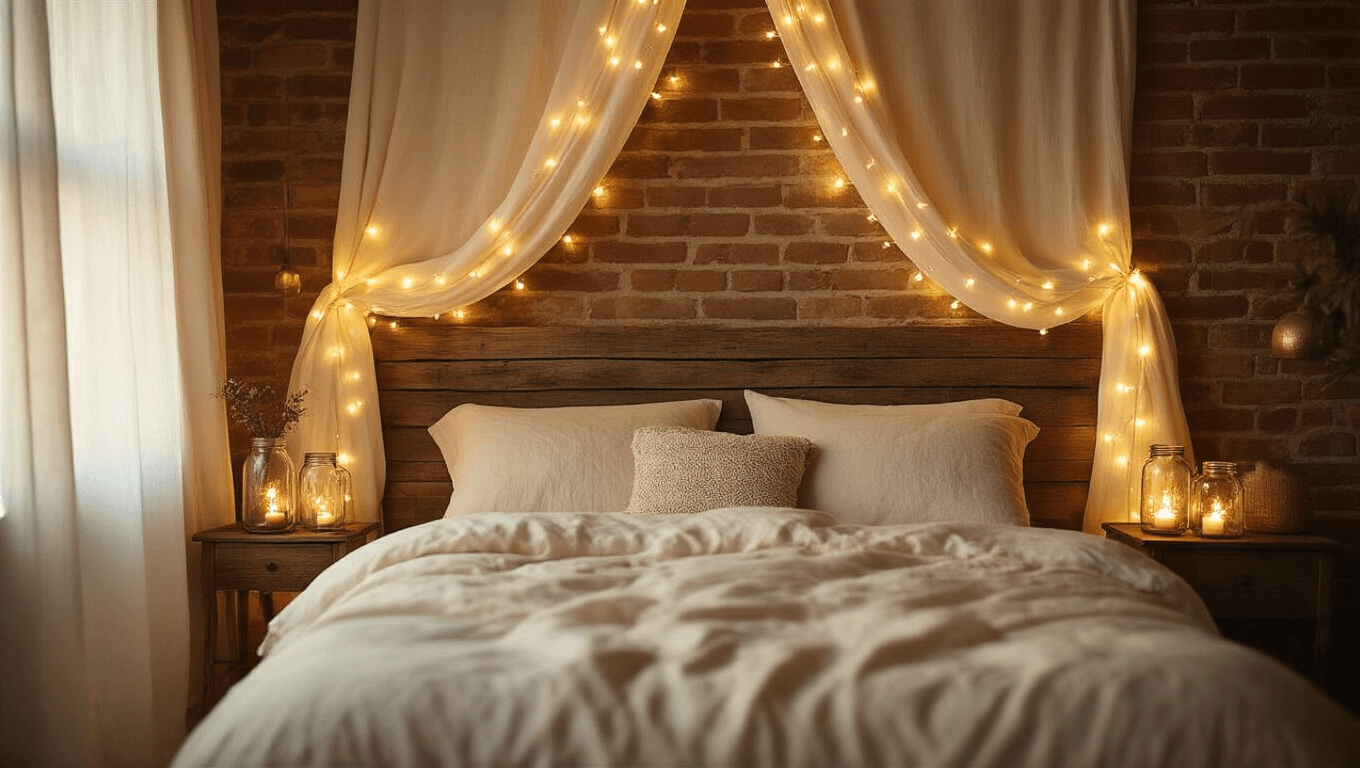
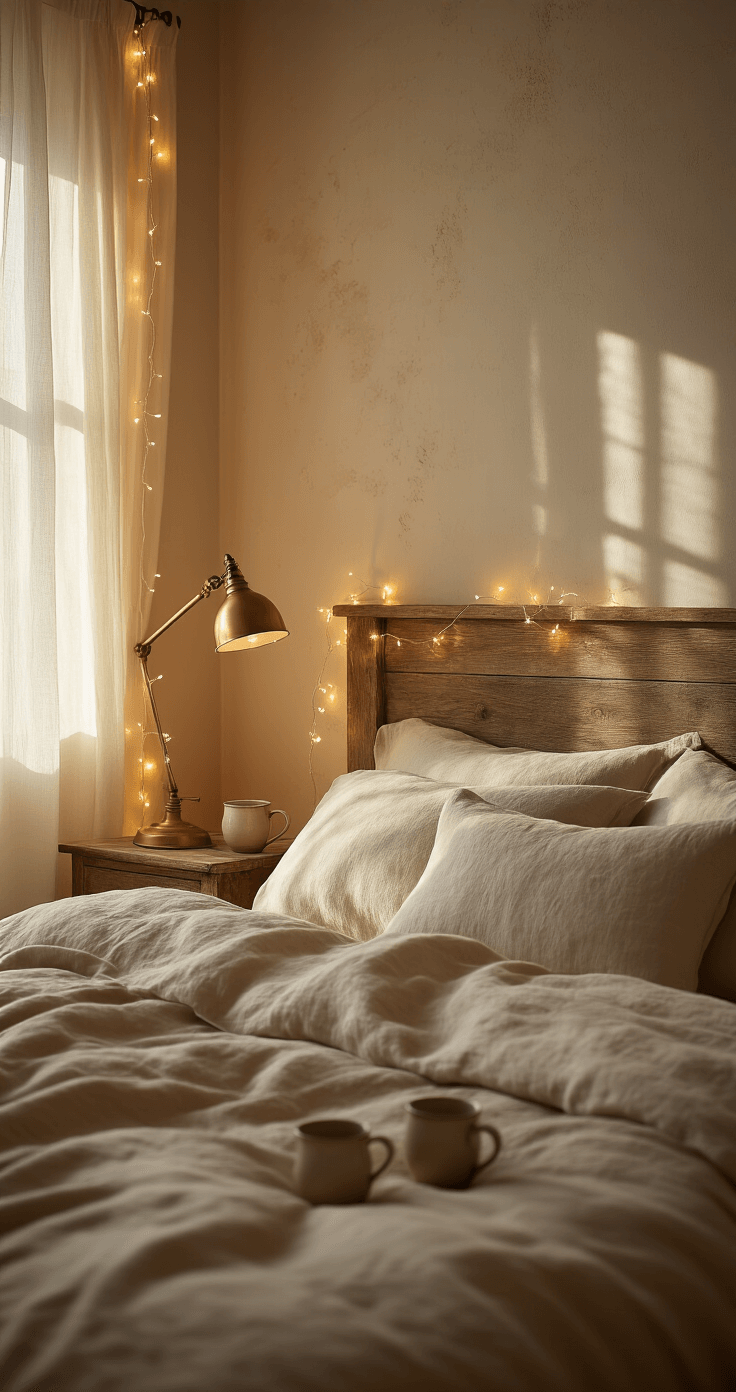
The headboard technique works every single time. Drape lights across the top of your headboard or weave them through a decorative light canopy hung above your bed. The indirect light creates a soft glow that’s perfect for reading without keeping your partner awake.
I ran lights vertically down each side of my bed frame, then horizontally across the top. It frames the entire bed and makes the space feel intentionally designed instead of accidentally decorated.
Behind furniture creates depth. String lights behind your nightstand or dresser produce a floating effect that adds dimension to flat walls. The light bounces off the wall and creates this gorgeous halo that makes cheap IKEA furniture look expensive.
Avoid the ceiling spiderweb look. Yeah, it’s easy to just tack lights randomly across your ceiling, but it looks chaotic and college-dormish. If you’re going ceiling-mounted, create deliberate patterns—geometric shapes, defined borders, or radial designs that have clear intention.
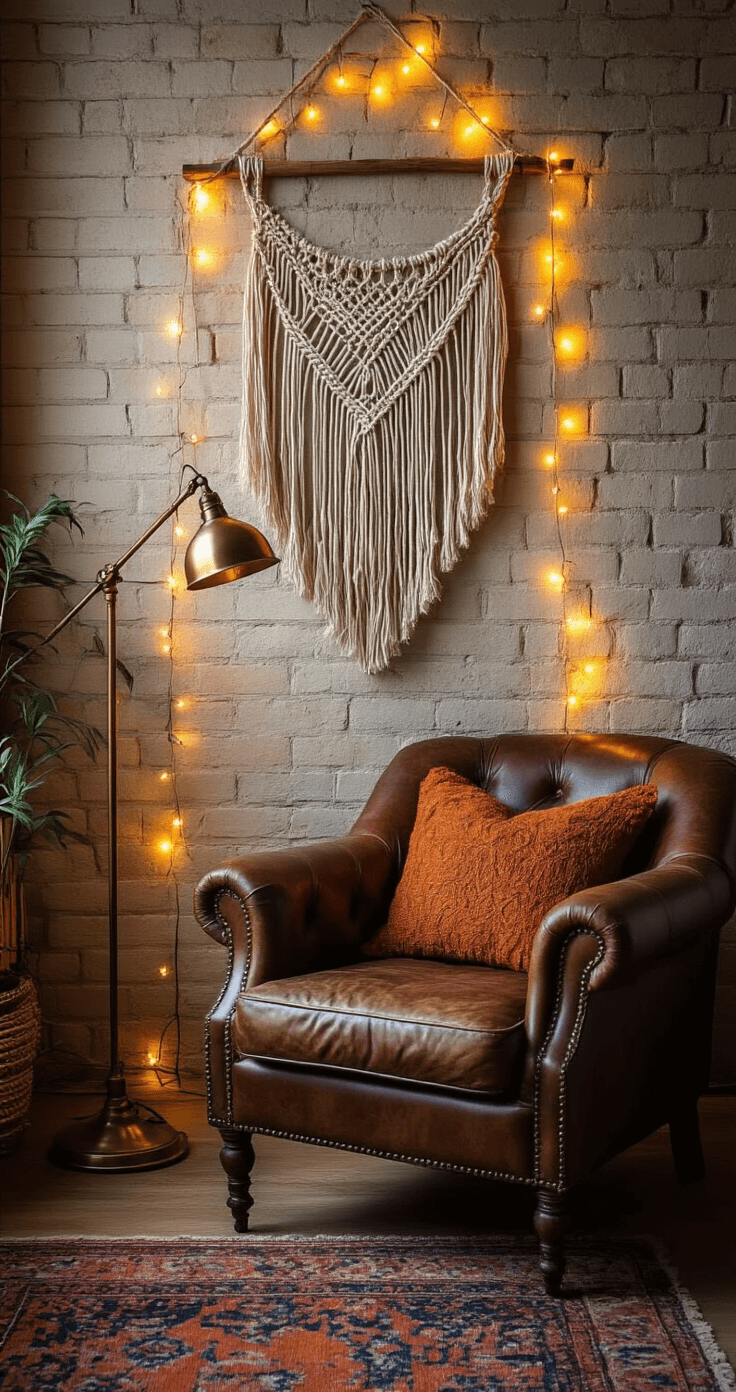
Living Room Layers
Living rooms need multiple light sources at different heights to feel balanced.
Mirrors amplify everything. Position lights around or behind mirrors to double their impact through reflection. I placed lights behind a large decorative wall mirror and it looks like the light is eman