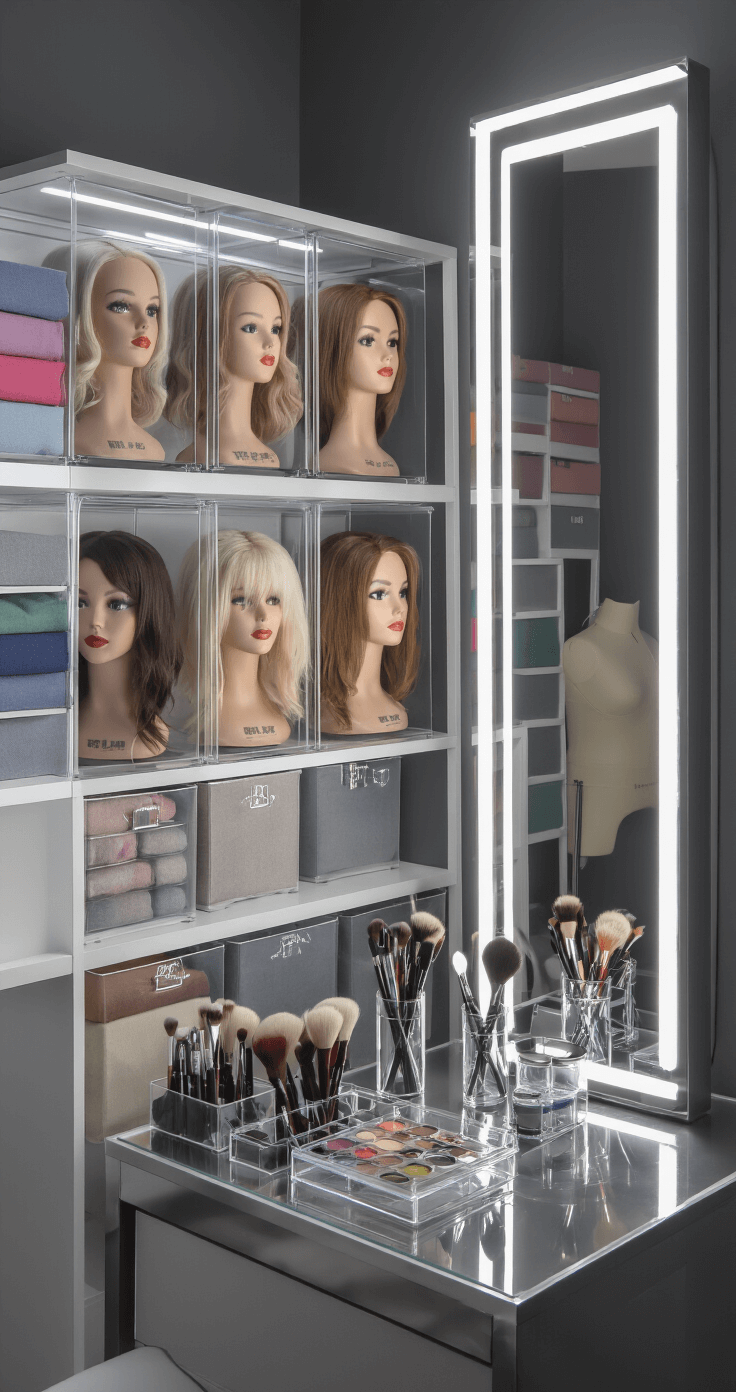
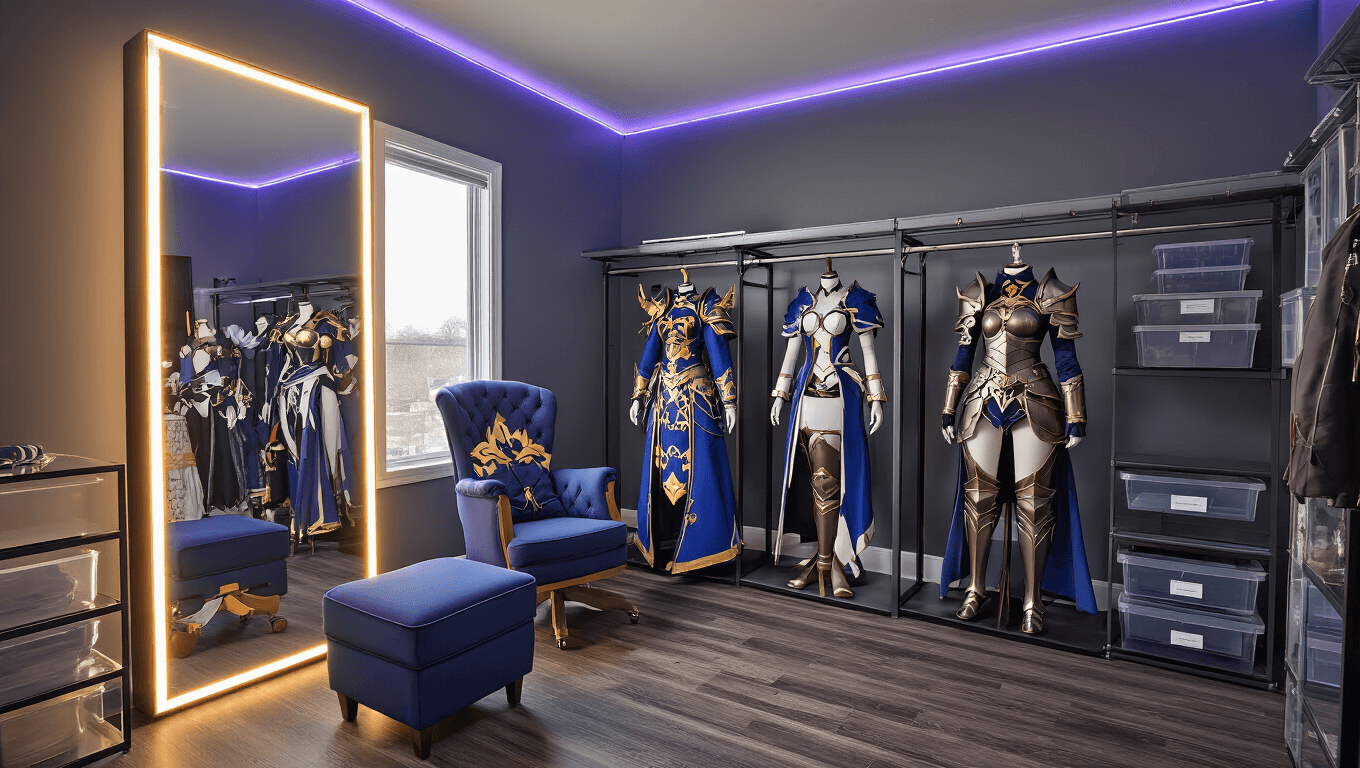
How I Built the Ultimate Cosplay Lounge That Actually Works
Contents
Cosplay lounge areas aren’t just about slapping some anime posters on the wall and calling it a day.
I learned this the hard way after my first attempt turned into a chaotic mess of tangled wigs, wrinkled costumes draped over chairs, and LED strips that made my room look like a discount nightclub.
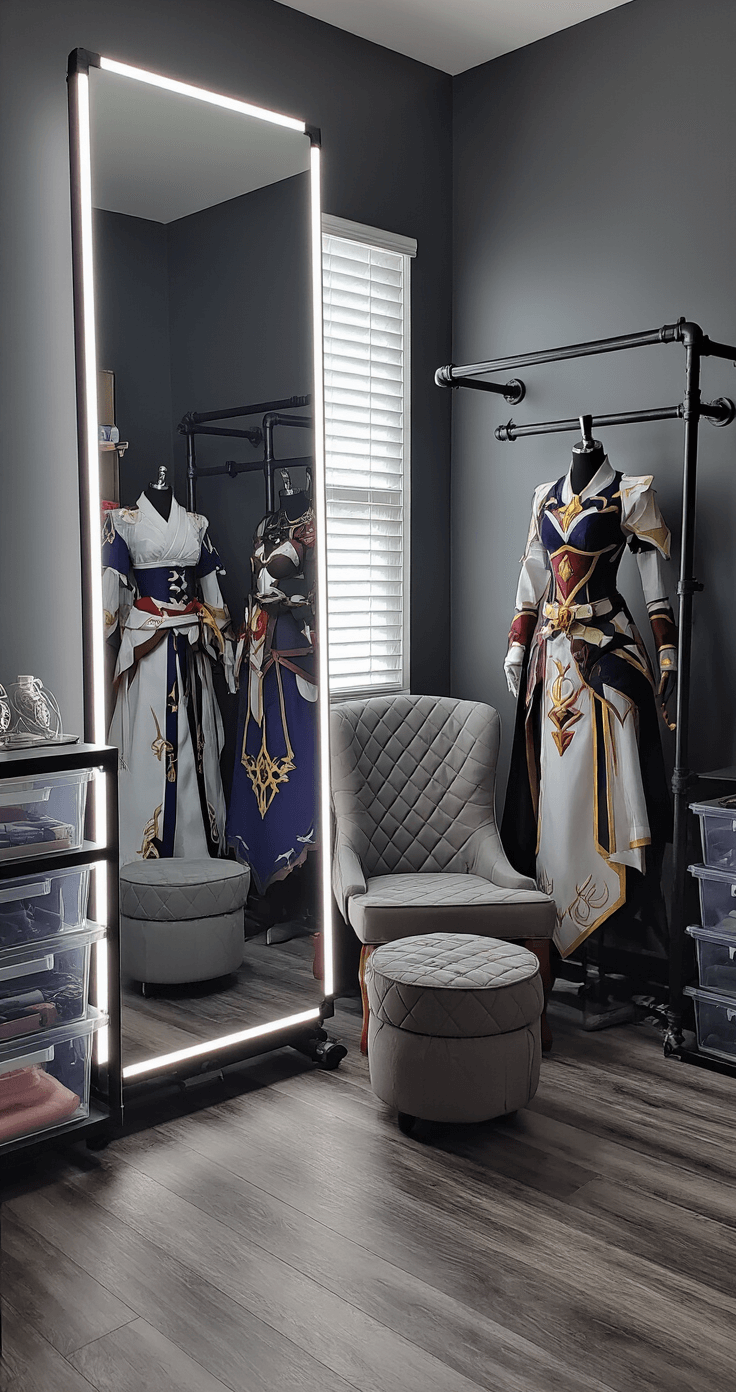
You’re probably wondering how to display your costumes without turning your bedroom into a storage unit. Maybe you’re tired of digging through boxes every time you need that specific wig. Or perhaps you just want a space that actually feels like you—where anime meets comfort without looking like you’re living in a teenager’s fever dream.
I’ve spent two years perfecting my cosplay lounge, and I’m going to walk you through exactly how I did it without breaking the bank or needing a contractor on speed dial.
Why Most Cosplay Spaces Fail (And How Mine Almost Did)
My first setup was a disaster.
I bought everything I thought looked cool on Pinterest—neon signs, gaming chairs, random LED strips—and threw them all into one corner of my bedroom.
The result? Visual chaos.
The lights clashed with my wall color. The gaming chair blocked access to my costume rack. My expensive cosplays were getting dusty on a cheap clothing rack from Target.
Here’s what actually matters:
- Function comes before aesthetics.
- Your lounge needs to work as a dressing area, display space, and relaxation zone—sometimes all at once.
- Lighting makes or breaks everything.
- Bad lighting turns gorgeous costumes into shadowy blobs. Good lighting? That’s Instagram gold.
- Storage isn’t optional.
- Wigs, accessories, makeup, props—they multiply like rabbits. Plan for twice as much storage as you think you need.
The Foundation: Getting Your Space Ready
Start with your walls and floors.
I painted mine a deep charcoal gray—not black, because true black absorbs too much light and makes the room feel like a cave.
Charcoal gives you that dramatic backdrop without killing your LED effects.
For flooring, I went with vinyl plank flooring in a dark wood finish.
Why?
- Resists water and makeup spills
- Easy to clean after messy crafting sessions
- Won’t stain when you inevitably drop fabric dye
- Costs way less than hardwood
- Installs without professional help
Measure everything twice.
I sketched my room layout on graph paper like a total nerd, and it saved me from buying a mirror that wouldn’t fit through my doorway.
Mark where outlets are. Note which walls get natural light. Identify dead zones where furniture just won’t work.
The Hero Pieces That Transform Everything
The mirror situation is non-negotiable.
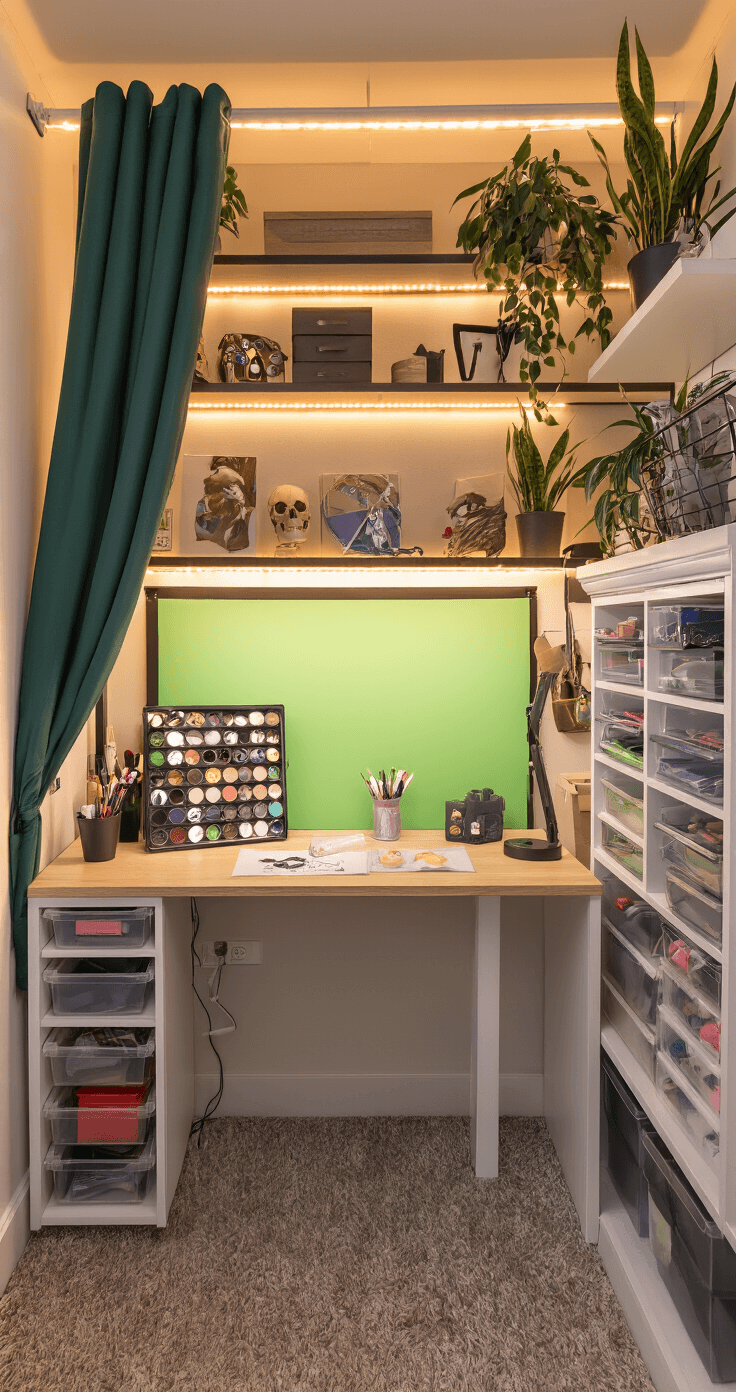
I installed a full-length LED mirror as my centerpiece, and it changed everything.
Not the flimsy door-hanging kind—a proper floor mirror with integrated LED lighting around the frame.
This single piece lets you:
- Check costumes from every angle
- Create content without additional ring lights
- Do makeup with proper illumination
- Practice poses and expressions
- Take photos that don’t need heavy editing
Position it where you have at least three feet of clearance in front. Trust me on this—you need room to move, especially in bigger costumes with wings or props.
Seating that actually supports your back.
After six hours of crafting foam armor, the last thing you need is a chair that makes your spine scream.
I tested three options:
- A racing-style gaming chair (looked cool, felt like sitting on cardboard after an hour).
- A cheap office chair (boring but functional).
- A quilted accent chair with an ottoman (the winner).
The accent chair gave me comfort, style, and didn’t scream “I live in my parents’ basement” when I shot room tour videos.
Plus, the ottoman doubles as extra seating when friends come over for cosplay work sessions.
Display systems that showcase without damaging.
Costumes deserve better than wire hangers and hope.
I use three systems:
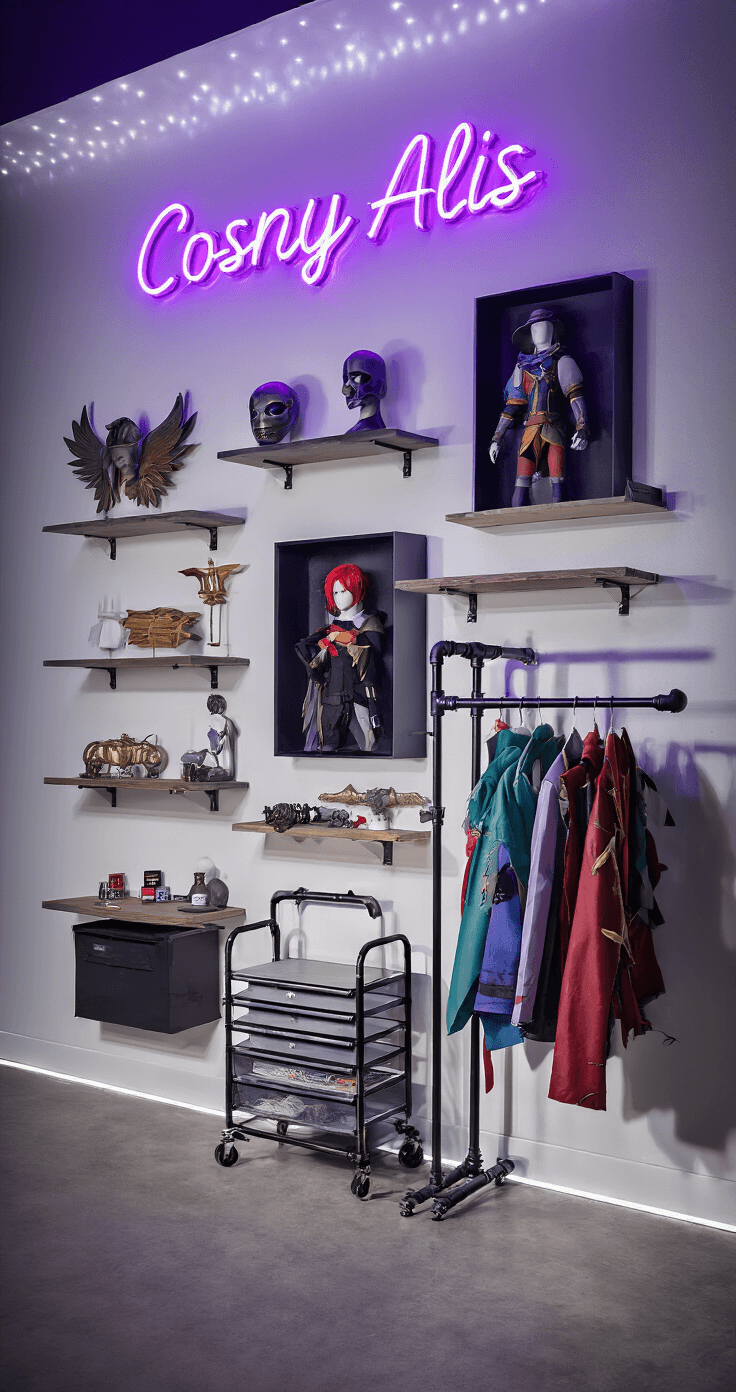
- Dress forms for statement pieces—my Genshin Impact and Elden Ring costumes live on adjustable dress forms that let me style them exactly how they’ll look when worn.
- Wall-mounted garment racks—industrial pipe racks hold everyday cosplays and works-in-progress. They’re sturdy enough for heavy costumes with armor pieces.
- Shadow boxes and shelves—smaller items like props, accessories, and collectibles get displayed on floating shelves at varying heights.
Lighting: Where Magic Actually Happens
Lighting confused me for months until I stopped thinking like a decorator and started thinking like a photographer.
Layer your lighting in three levels:
- Ambient lighting sets the room’s base mood.
I use smart LED strip lights along the ceiling perimeter, controlled through my phone.
Different colors for different activities:
- Cool white for crafting and detail work
- Warm amber for relaxing and gaming
- Purple/blue for photography and videos
- RGB color-cycling for parties or streaming
- Task lighting illuminates specific work areas.
A desk lamp with adjustable brightness sits at my crafting station. The mirror’s integrated LEDs provide face-level lighting for makeup. A clip-on reading light attaches to my wig styling station.
- Accent lighting creates drama and highlights displays.
Small puck lights shine down on my favorite costume displays. A neon sign (custom-made with my cosplay alias) adds personality without overwhelming the space. Battery-operated fairy lights add subtle sparkle to shelving.
The game-changer? Everything connects to smart plugs.
One voice command shifts the entire room’s mood from “focused crafting mode” to “chill anime marathon vibes.”