
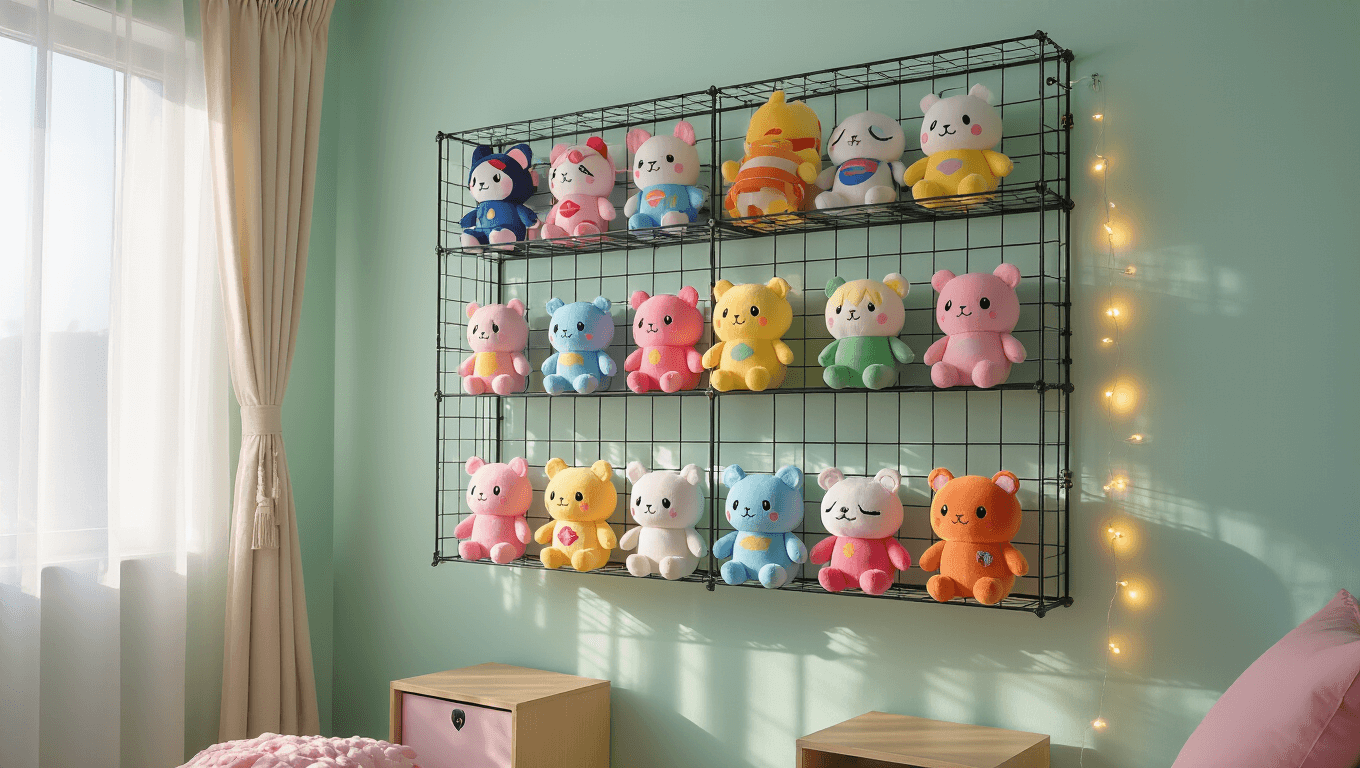
DIY Wall Shelves for Plushies: Transform Your Collection Into Stunning Wall Art
Contents
DIY wall shelves for plushies solve one of the most frustrating problems collectors face—where do you put all these adorable stuffed animals without them ending up in a chaotic pile on your bed?
I’ve wrestled with this exact issue for years. My plushie collection kept growing, but my space didn’t. They’d tumble off my bed, get shoved in closets, or sit in bins where nobody could appreciate them.
Then I discovered the plushie wall. Game changer.
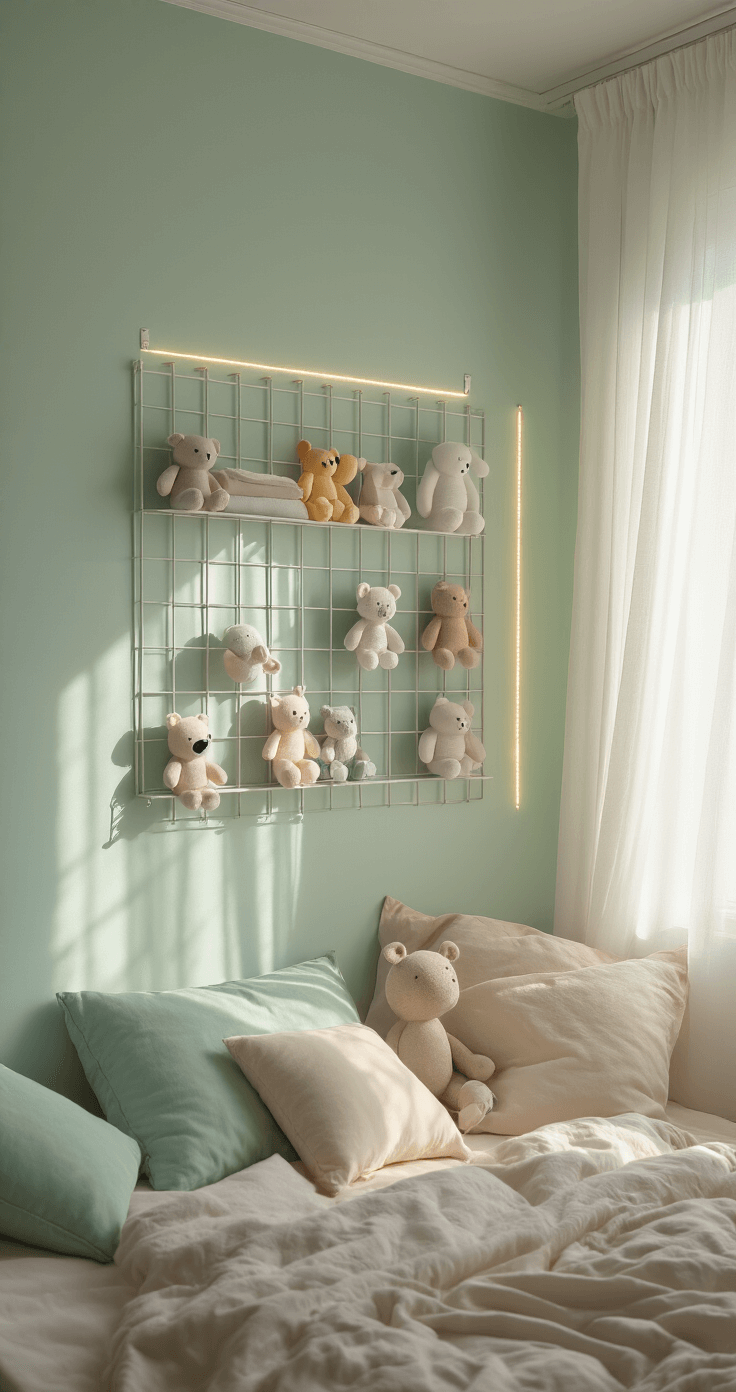
Why Your Plushies Deserve Better Than a Storage Bin
Let’s be honest—you didn’t spend money collecting these characters just to hide them away. Each one represents something: a favorite show, a convention memory, a gift from someone special. They deserve to be displayed like the little pieces of joy they are.
Storage bins? That’s basically plushie prison. Piled on your bed? You can’t actually sleep comfortably. Scattered around randomly? Looks messy no matter how cute they are individually.
A proper wall display transforms your collection from clutter into intentional decor. It’s functional art that actually makes your space feel more “you.”
The Two Main Methods That Actually Work
Method 1: The Metal Grid System
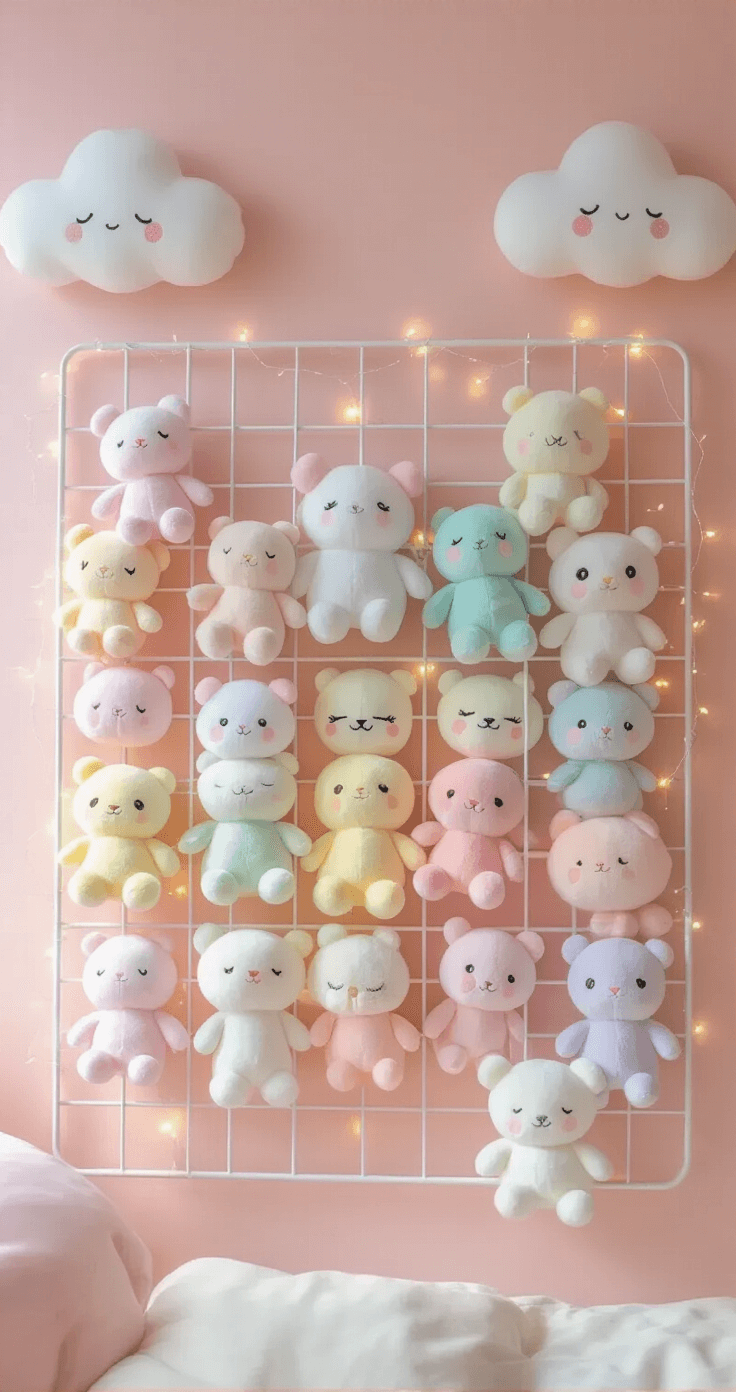
This is my personal favorite because it’s incredibly flexible. You mount metal wire grid panels to your wall using damage-free command hooks.
Then you attach each plushie using zip ties or pipe cleaners threaded through the grid openings. The genius part? You can reposition anything anytime without tools. Just unwrap the pipe cleaner, move the plushie, rewrap it.
Method 2: Connectable Shelving Units
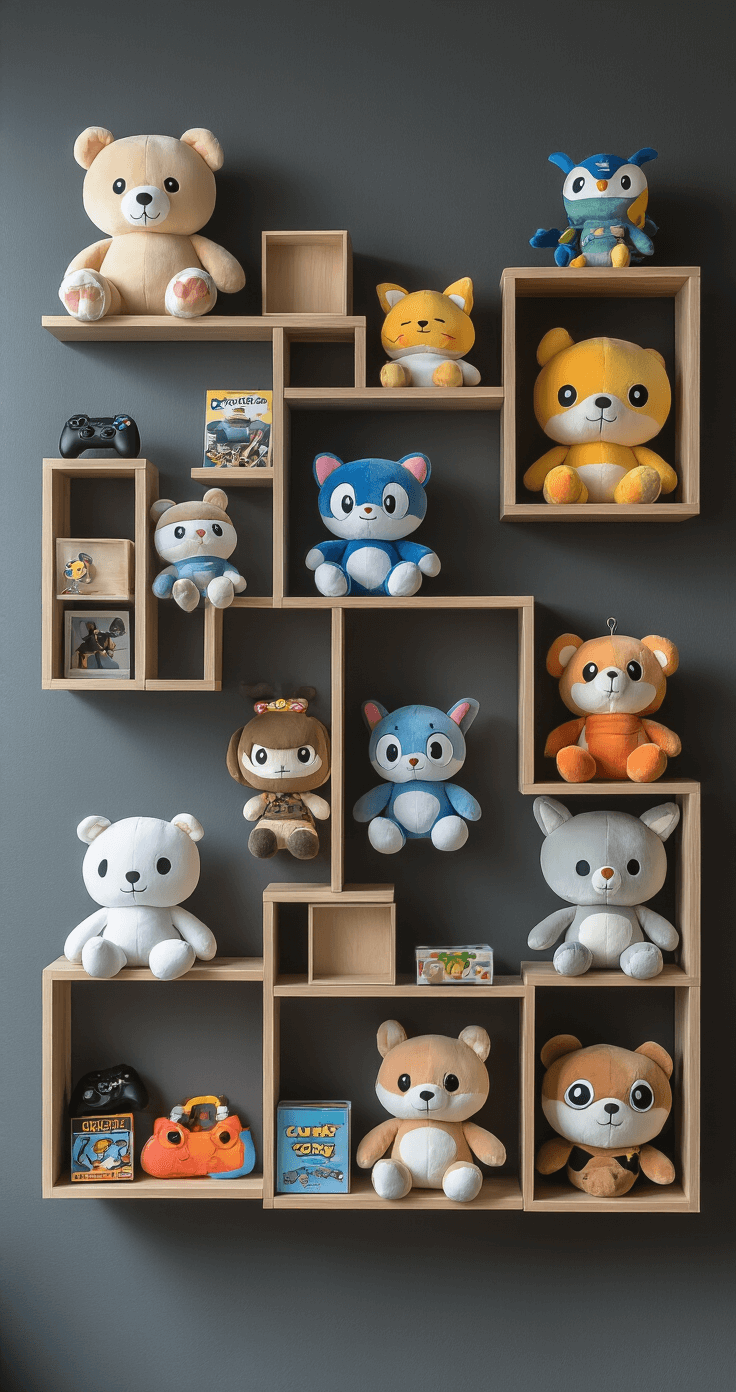
These are essentially cube organizers you can configure into custom shapes. Connectable cube storage shelves snap together like building blocks. Mount them to the wall, and each cube becomes a plushie display box.
This method works brilliantly if you want more structure and defined sections. It’s especially great for larger plushies that might sag on wire grids.
What You’ll Actually Need (And What You Can Skip)
Essential Materials:
- Metal grid panels OR connectable shelving (choose your fighter)
- Heavy-duty command strips or wall anchors
- Zip ties (get various sizes) or colorful pipe cleaners
- Wire cutters or scissors
- Level tool (or a good eye)
Nice-to-Have Additions:
- Battery-operated LED strip lights for ambiance
- Backdrop fabric if your wall color clashes
- Small S-hooks for hanging accessories
- Decorative frames to section off the display area
Skip These:
- Expensive custom shelving systems (we’re going budget-friendly here)
- Permanent mounting solutions (why damage your walls?)
- Matching plushie sets (mix and match looks better anyway)
Step-by-Step: Building Your Plushie Wall
Step 1: Scout Your Wall Space
Walk around your room and actually look at your walls with fresh eyes. You need a space that’s:
- Visible from your bed or desk (what’s the point otherwise?)
- Not blocking vents or light switches
- Large enough for your collection with room to grow
- Structurally sound (avoid crumbly drywall sections)
I chose the wall opposite my bed because it’s the first thing I see when I wake up. Pure serotonin boost every morning.
Step 2: Prep Your Command Hooks
Clean your wall section thoroughly with rubbing alcohol. This isn’t optional—dust and oils prevent command strips from adhering properly.
Wait for it to dry completely. I learned this the hard way when my entire grid crashed down at 2 AM. Not fun.
Apply your command hooks according to the weight capacity you need. Most plushie walls need 4-6 hooks for a standard grid panel. Space them evenly for weight distribution.
Pro tip: Press each hook firmly against the wall for 30 seconds and wait an hour before hanging anything.
Step 3: Mount Your Grid or Shelving
Hang your grid panel on the command hooks. Use a level to make sure it’s straight—a crooked grid will drive you crazy every time you look at it.
For shelving units, assemble them first on the floor. Test the configuration before committing to wall mounting. Once you’re happy with the layout, secure them with command strips rated for the total weight.
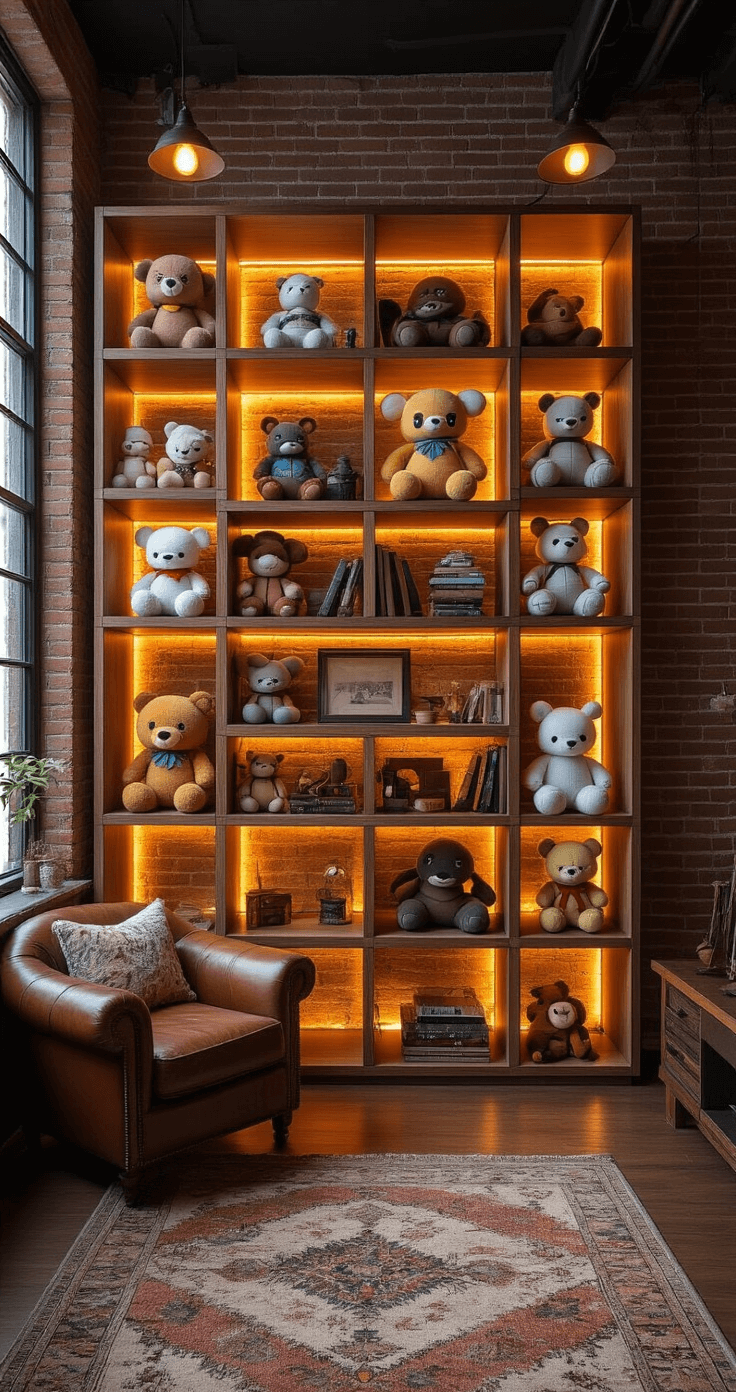
Step 4: Start Attaching Plushies Strategically
Here’s where it gets fun. Don’t just randomly zip-tie plushies wherever—there’s an art to this.
My arrangement strategy:
- Place your largest/favorite plushies first at eye level for focal points
- Build outward from these anchor pieces
- Alternate colors to avoid color-clumping that looks unbalanced
- Mix sizes so small plushies fill gaps between larger ones
- Face them at slight angles instead of all straight-on for dimension
Thread a zip tie or pipe cleaner around the plushie’s body or limbs. Loop it through the grid opening and secure it tightly. Trim excess zip tie length (those pokey ends are annoying).
Pipe cleaners give you more flexibility because they’re easier to undo and adjust. Zip ties are more secure but basically permanent unless you cut them off.
Step 5: Create Visual Flow
Step back every few plushies to check the overall look. You’re going for intentional chaos—organized enough to look designed, varied enough to stay interesting.
Visual tricks that work:
-
<